
Why Dukes Has No County Arrest Log
DCSO publishes no 72-hour booking list and no weekly blotter. The real substitutes are municipal. Edgartown posts weekly incident-report PDFs, Oak Bluffs folds police material into Town Administrator reports, and Tisbury maintains Daily Logs files. Each town controls its own documents. None claims complete countywide coverage, and none offers a public list of everyone housed at the regional lock-up. Timing matters too. Publication rarely lines up with the event itself. Edgartown groups reports by week, Oak Bluffs ties police entries to an administrative report date, and Tisbury's daily-log page states no fixed refresh or roll-off rule. So a same-day search can come up empty. Working backward across several dates often turns up an item that was invisible the first day.
Read the Dukes Police Blotter
Begin with the town that handled the incident. That keeps a police report from being mistaken for a county booking. Then work across dates rather than assuming one PDF holds every event, and switch to the right agency when the question changes.
- Choose the town source: Edgartown incident reports, Oak Bluffs administrator reports, or Tisbury Daily Logs.
- Open the report covering the event date and nearby publication dates. Note the report period, not merely the download date.
- Read the event type, location, time, and agency language. “Arrest,” “summons,” and “protective custody” do not mean the same thing.
- Contact DCSO if present local custody is the question. Contact the police records officer for the source report.
- Use Edgartown District Court or MassCourts for the complaint, arraignment, bail, continuance, and final disposition where publicly available.
When an event may still be unfolding, use the Dukes County arrests last 24 hours fallback chain. A town blotter leaves a wider trail but no current-custody answer.
Dukes County Arrest Log Fields
All three municipal systems are incident logs. Fields shift from town to town and report to report. A table can flag what an entry suggests and what it cannot safely prove, since blank or redacted details may reflect access rules rather than a thin police response.
| Log detail | How to interpret it |
|---|---|
| Date and time | Usually the police event or call, not county intake completion |
| Town and location | Where police activity occurred, not necessarily where a person was held |
| Event type | May be an arrest, summons, call, incident, or protective custody |
| Name | May be omitted or redacted; confirm identity from an official record |
| Alleged offense | An initial charge, not a conviction or final court charge |
| Disposition line | Often the police response, not the court’s final case disposition |
| Photograph | No municipal path establishes a DCSO booking-photo display |
Every town adds its own caveat. Edgartown warns its reports may not be all-inclusive, may change, and can omit exempt material. Oak Bluffs blends police activity into broader town administration. Tisbury's depth depends on linked files, so read each field in that publishing context.
Three Dukes Arrest Log Formats
Edgartown runs the tightest format. Its Police Department posts weekly incident-report PDFs rather than any jail feed. Oak Bluffs offers no stand-alone arrest-log page. Its recurring police entries sit inside Town Administrator and Assistant Town Administrator reports. Tisbury labels its file-share page Daily Logs. It is the closest municipal daily interface. The source guarantees neither every event nor a set archive depth. The Tisbury Police file-share page shows the official municipal document route.
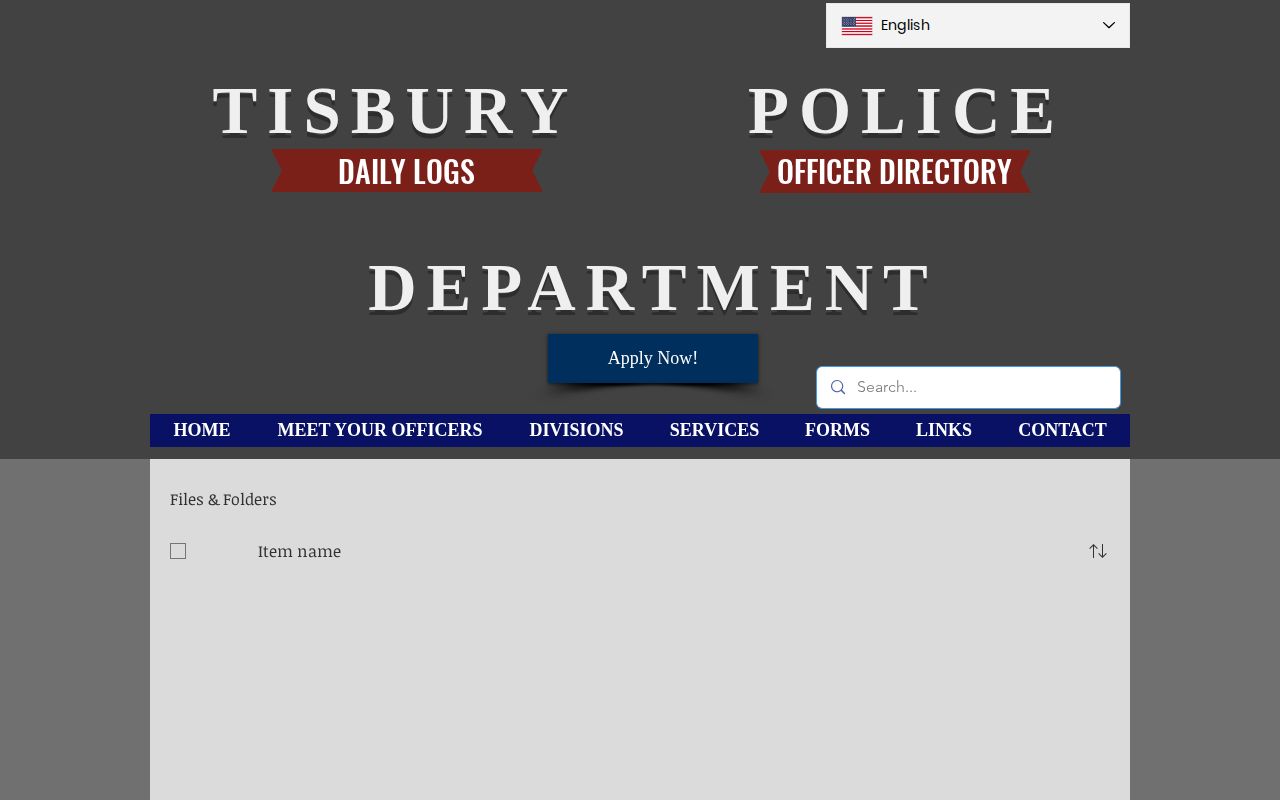
Those files may document town police activity. They do not show booking acceptance or current custody at the county jail.
Dukes Logs Include More Than Arrests
Never flatten a town log into an arrest-only list. The Oak Bluffs example mixes calls and protective-custody activity with arrest information. Edgartown's reports likewise cover incidents, not bookings alone. That blended structure is one of Dukes County's biggest data quirks.
- Arrest
- A police action based on alleged legal grounds. It can lead to release, summons processing, or delivery to a lock-up.
- Booking
- The correctional intake after delivery to a facility. It creates a different record and later timestamp.
- Protective custody
- A safety-based police action that should not be labeled a criminal booking without an official source saying so.
- Disposition
- The court’s later outcome, which may differ from the first log description.
Even a clean arrest line proves no continued confinement. DCSO transports people to courts and other facilities, and release can intervene. Ask the agency responsible for that stage about custody.
Dukes Arrest News Runs Weekly
Local journalism fills in what official sources leave out. The Martha's Vineyard Times Cops and Courts stream and the Vineyard Gazette Police/Court section cover island police events, arraignments, bail, and later proceedings. Their rhythm is weekly, rolling, or issue-based. Neither serves as a DCSO booking feed. A story photograph is not a booking image unless the report identifies it that way. The Vineyard Gazette Police/Court section displays the rolling local-news format.
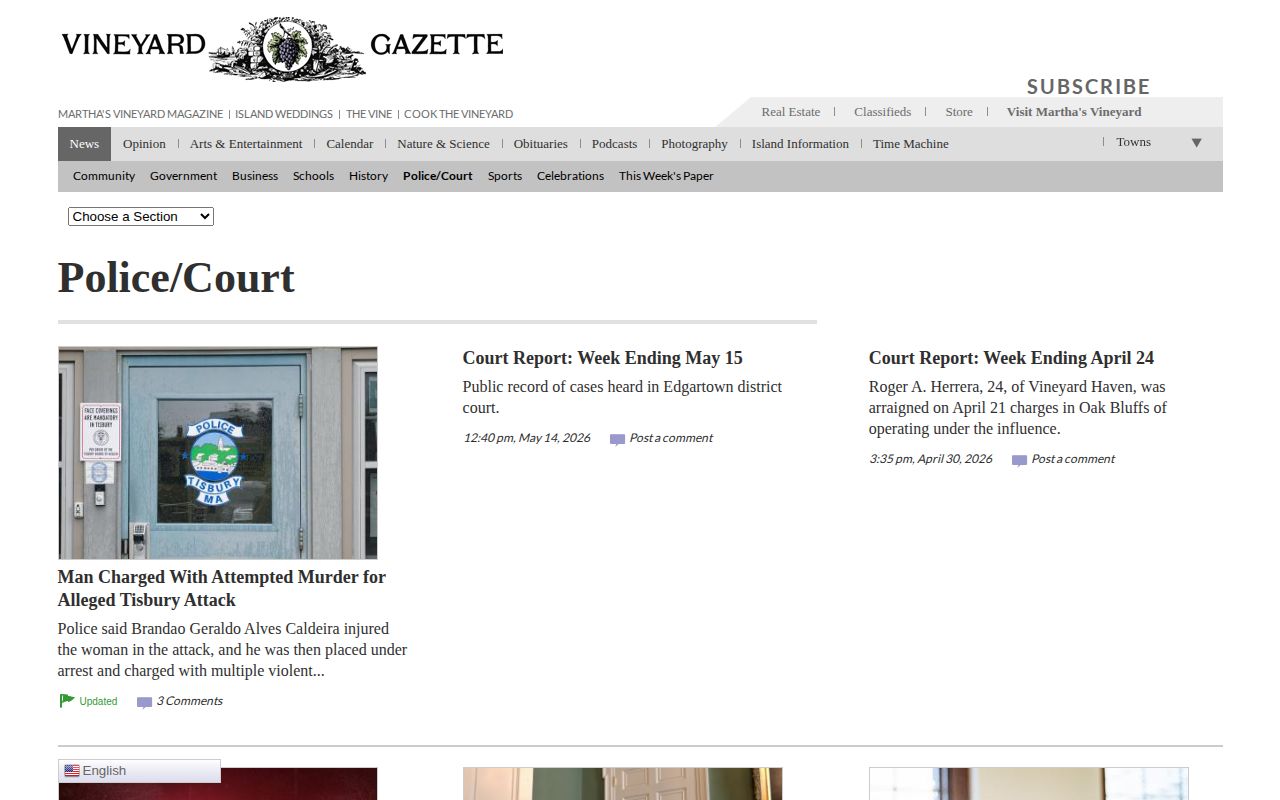
News can link an incident to a court event. Still, it may summarize, omit, or lag the public record. Official town files come first. News reports rank second. Aggregator pages sit lower still: the only county-level option is a sparse Mugshots.com directory, which is neither current custody nor an official archive.
Dukes Arrest Archives and Retention
DCSO publishes no countywide web archive depth. Older municipal files live under each town's retention practice. A visible page may stop reaching the date you need. Request the source report from the town police. For a jail commitment, discharge, booking, or photograph record, ask DCSO directly. The Massachusetts statewide schedule treats inmate commitments and discharge logs as permanent. Some fingerprint-card and photograph series share that treatment. Other central case and jail records carry six-year handling points before electronic migration. Dukes may not follow every series the same way. Check the local series, transfer, destruction, or electronic migration with the DCSO Records Access Officer. The Gazette Court Report collection opens a separate historical news path.
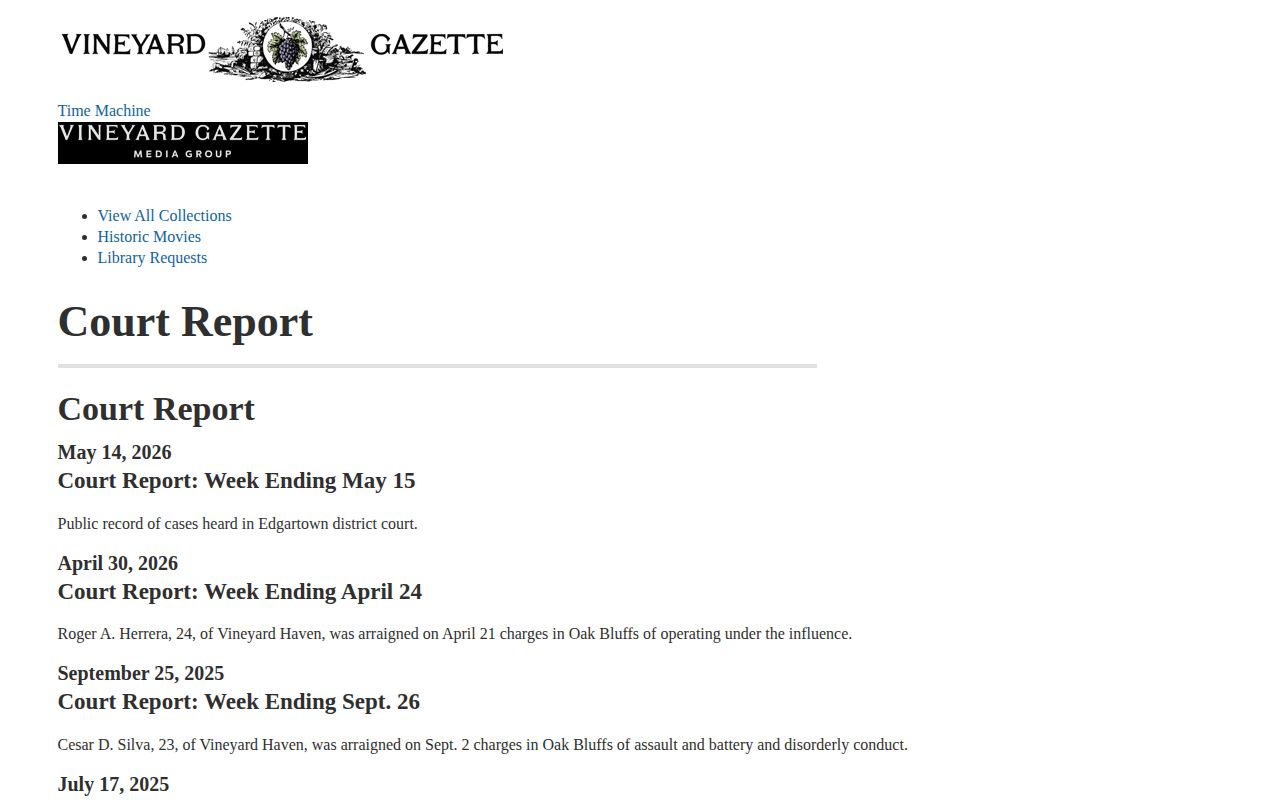
Old reporting still has value. Exact facts live in the agency record or the court file. Those are the primary sources. Before chasing very old material through Dukes County, consider whether the record series moved to the Massachusetts Archives. State archivists can assist once you know which agency created the file. You also need to know what kind of series it belongs to. Make each request narrow. Name the town. Give a date range. State the event type where you can. Say whether you want a police report, a court docket, a commitment log, a booking file, or a photograph. Note: A retained record may be offline, restricted, redacted, transferred, or unavailable as a public copy, since retention alone does not establish access.
Dukes Arrest Entries Need Court Context
A police log is only the first chapter. Initial charges often change, and later court filings can amend, reduce, dismiss, or replace them. So read the docket through disposition. Do not treat a first report as the final word on any Dukes County arrest. The Dukes County recent-arrests overview keeps three channels distinct. Those are town police records, county custody, and court follow-up. That separation counts most when a name shows up in one channel but not another. If a report changes, note its publication date. Then ask the creating agency for the official version. News summaries and directory pages can point to a lead. They never control the public record. Corrections come from court disposition and agency files. Keep your details tight. Those identifiers matter. They help staff tell an old police log apart from a later jail or court record for the same arrest.